01
/seer/dataset/1.0.0
Dataset
Content-addressed AI or research data with a declared schema and license.
- type
- root: CID
- schema
- license
Seer Data & Evaluation Protocol (SDEP) turns datasets, rubrics, evaluations and signals into content-addressed, versioned, composable artifacts — carried by libp2p, IPFS, Multiformats and IPLD.
We are applying to host a Community Hub at Devcon 8 in India. Community Hubs are physical spaces inside Devcon where communities host their own programming, workshops, discussions and research sessions.
This year’s Hubs are going back to the roots: Ethereum’s core principles and the communities strengthening them. Our proposal connects those principles to public goods funding, contribution attribution, and open infrastructure — bringing together builders, researchers, grant operators, and community friends to explore better public goods funding with open AI models.

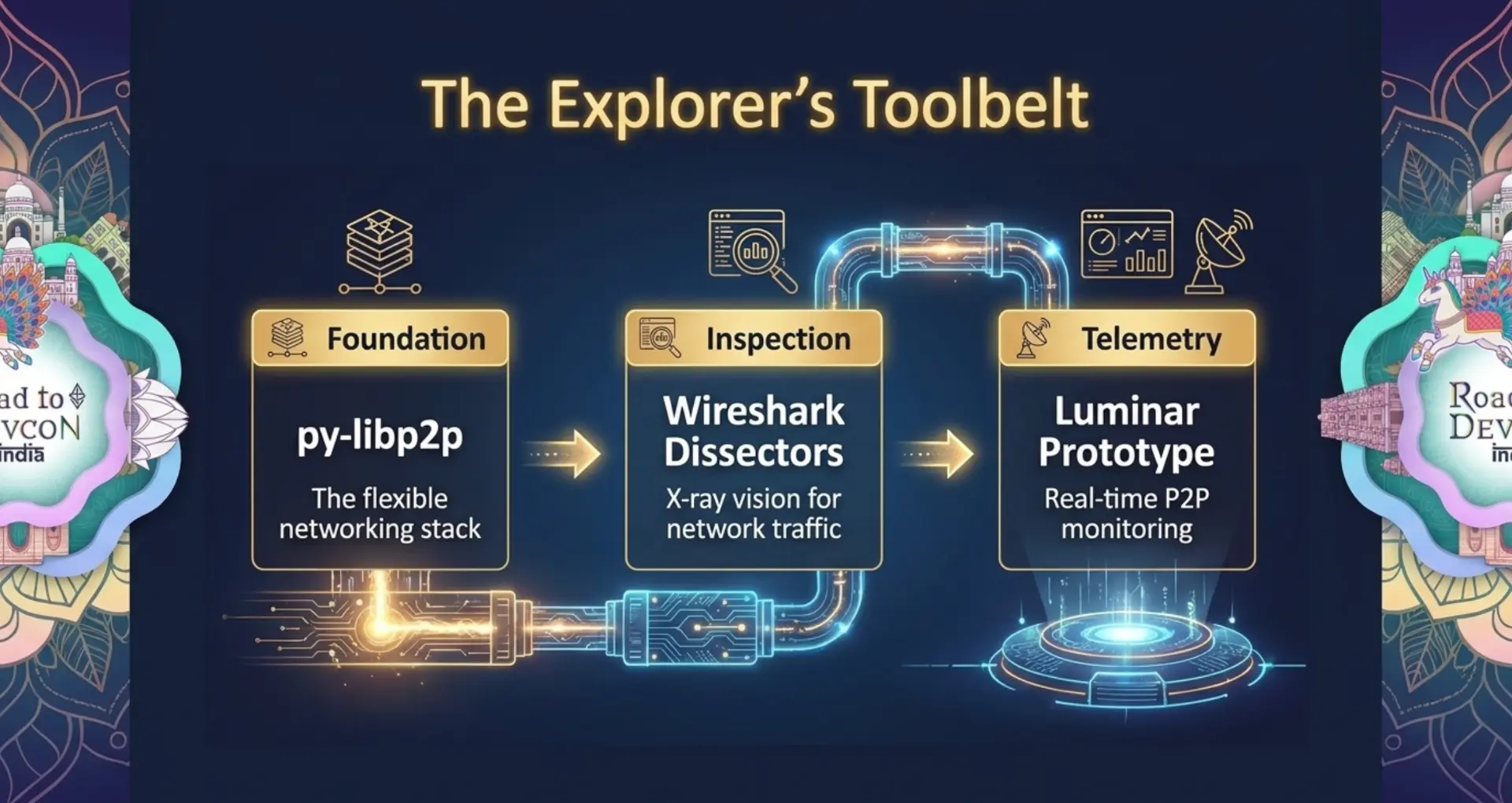
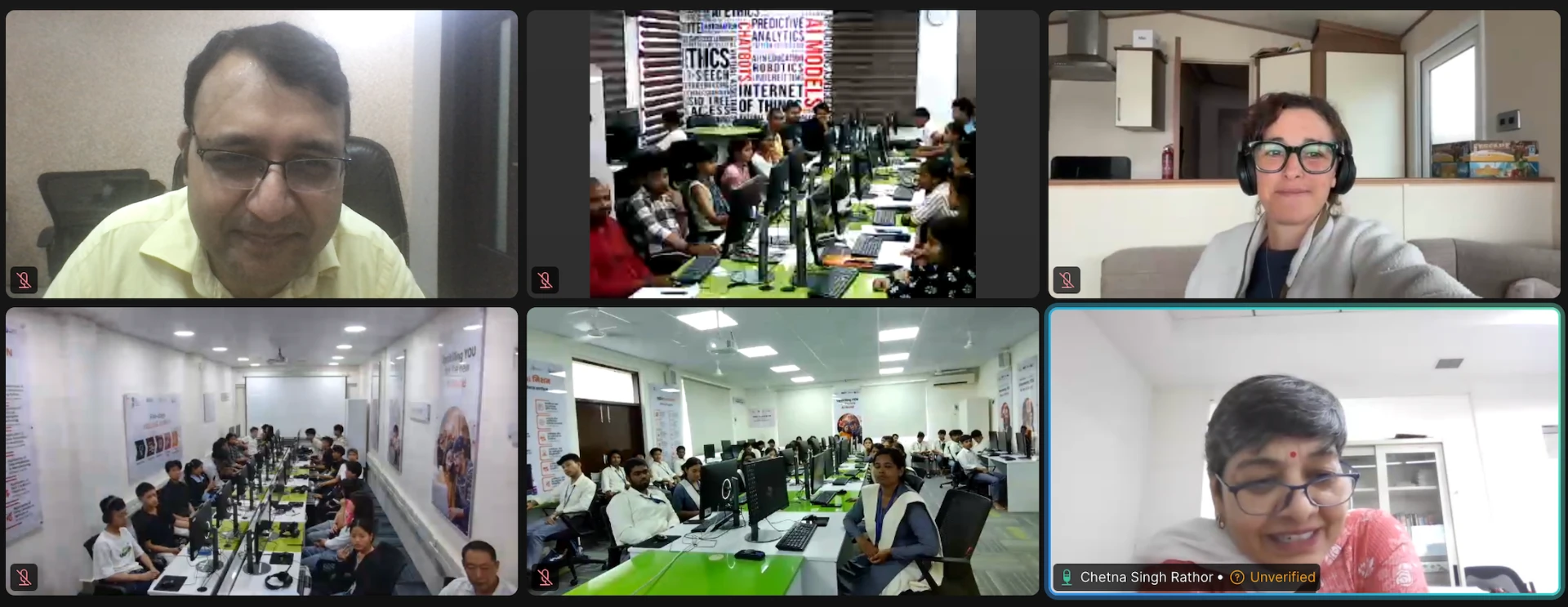
A three-day Road to Devcon workshop held August 3–5, focused on hands-on data curation and data annotation using libp2p, IPFS, Python libraries and py-libp2p — the same primitives SDEP builds on.
Organized by Johanna Moran and Manu Sheel Gupta in collaboration with the India AI Mission under NIELIT and MEITY, Government of India.
The existing Seer experience already gestures at something larger. Deep Seer lets users publish predictions and run strategies. AI Prediction Markets aggregate collective intelligence around hard questions. The Ethereum evaluation work asks contributors to score open-source projects across structured dimensions.
Underneath, the same primitive keeps appearing: a mechanism for collective intelligence around complex evaluation. SDEP makes that primitive protocol-native — so contributors, agents and dapps can build on the same substrate.
Every SDEP object is content-addressed and linked. Consume any of them from an application, an agent, or a dapp — no Seer API required.
Content-addressed AI or research data with a declared schema and license.
Explicit, immutable evaluation criteria and weights. A new CID for every change.
The result of applying a rubric to a subject and dataset, with evidence.
A single contribution: human vote, market price, model output, agent score.
The verifiable graph linking inputs and outputs across every operation.
A network peer with declared capabilities and supported schemas.
SDEP composes proven open infrastructure. Seer defines the objects, the events and the agent contracts — the network moves the bits.
Once published, a rubric is immutable. Any change produces a new CID. An evaluation isn't just "Project X scored 72." It's "Project X scored 72 using v3 of this rubric, against v5 of this dataset, from these signals."
That reproducibility is the whole point.
{
  "type": "seer/rubric",
  "version": "1.0",
  "name": "repository-originality",
  "criteria": [
    { "id": "code-originality",        "weight": 0.30 },
    { "id": "historical-development",  "weight": 0.25 },
    { "id": "novel-contribution",      "weight": 0.45 }
  ]
}{
"type": "seer/evaluation",
"dataset": "bafy…d3f2",
"rubric": "bafy…9ab1",
"subject": "github:ethereum/go-ethereum",
"evaluator":"12D3KooW…",
"score": 0.82,
"confidence": 0.76,
"evidence": ["bafy…", "bafy…"],
"provenance":"bafy…"
}Seer already touches a large surface of Ethereum repositories and evaluation questions. SDEP makes each category — execution clients, consensus clients, dev tools, security, infra, libraries — an addressable evaluation subject with its own rubric.
The strategic proposal frames the opportunity; the technical RFC describes how it's built. A third document tracks the collaboration with Public AI and the Berkman Center at Harvard.
The full case for turning Seer into an open protocol layer at the intersection of AI data, agents, evaluation and prediction markets.
The proposed data model, protocol IDs and network topology — built on Ethereum's open infrastructure libraries.
Discussion thread on the pldg-dashboard repository, plus the licensing note co-developed with Public AI and libp2p.
SDEP object types, IPLD schemas, CID conventions, protocol IDs, dataset licensing metadata.
seer-node with libp2p, IPFS integration, dataset publish + retrieval, DHT discovery.
Rubrics, evaluations, signals and pluggable weighted aggregation.
Convert prediction and evaluation artifacts into SDEP objects, backward compatible.
Agent capability discovery, dataset discovery, evaluation execution, publication.
The specification is a draft. Contributors, agent authors and dapp builders are invited to shape SDEP alongside the reference node.